

The earthquakes of April 2015 literally shook all of us out of our complacency, and forced us to understand the value of open spaces -- just as after the 1934 earthquake, when tens of thousands of Kathmandu residents moved to the open grounds at Tundikhel, or to Lagankhel in Patan.
But memories of disasters are short-lived, and in the past five years instead of protecting the last remaining spaces in Kathmandu Valley, we have allowed them to be encroached upon. At the heart of Kathmandu, Tundikhel represents in a microcosm what is happening across urban Nepal as people move into the cities and real estate prices soar.
The land mafia, with its political protection, has infiltrated school management committees and taken over most school playgrounds located on prime real estate. The government created a green belt on the Ring Road -- now it is busy chopping down the last remaining jacarandas. The vehicle lobby is obviously stronger than the tree lobby.
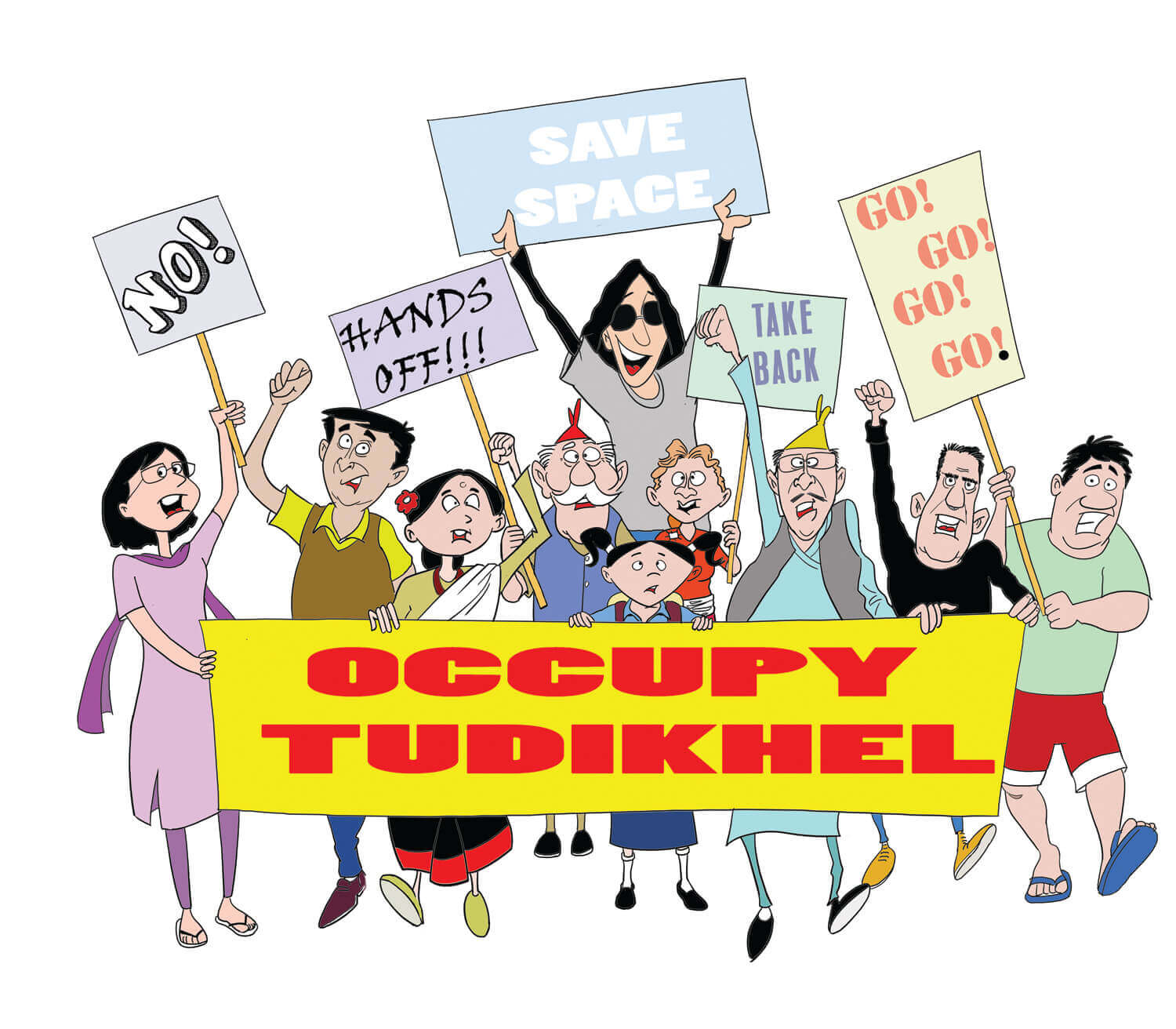
This newspaper has been covering the shrinking Tundikhel since 2002, and for the first time printed maps showing the army’s steady encroachment into the open space. Since the government seems to be too slow to act, it is the public and communities that need to be vigilant -- which is why the current #OccupyTundikhel campaign is so important.
One good way to begin protecting open spaces like Tundikhel would be to have every local government across the country make an inventory of such spaces in its jurisdiction. These should then be added to a national open space protected list, and legislation passed to ensure no one who eyes them can actually get their hands on these invaluable areas.
Former Patan mayor Buddhi Raj Bajracharya set a good example by protecting community spaces during his tenure. A national database could be created and made available online so that no one dares to buy, sell or encroach on these open spaces.
Rituals and festivals can be important reasons to save many of the Kathmandu Valley’s open spaces from encroachment. Tundikhel hosts annual festivals like the feeding of the Gurumapa, Ghoda Jatra, Shivaratri and, more recently, the New Year’s Day showcase of numerous ethnic groups from across Nepal.
A published calendar of such events could help enhance the feeling of ownership of open spaces across the country. Disaster preparedness drills in places like Tundikhel could also be pencilled in as regular events.