The visit to Kathmandu by Indian Chief of Army Staff General Manoj Mukund Naravane this week is an opportunity for Nepal to move on from an acrimonious period in its relationship with India, as well as reassess India’s position in global geopolitical realignments.
It is also worth considering some underlying factors that appear to trigger endless challenges leading to unhealthy irritants in bilateral relations between Nepal and India.
One of the questions that deserves more attention is Nepal’s perception of India, and how that factors into good or bad calculus affecting Kathmandu’s foreign policy approach towards New Delhi.
Nepal’s worldview of modern, independent India was formed during the post World-War II era, and was immediately overshadowed by the onset of the Cold War and the subsequent division of the world into essentially two distinct blocs (three if you take the non-aligned movement seriously).
Not only was the world carved up ideologically, but this polarisation carried geographical implications, the Berlin Wall being the most obvious example. There were many such walls at the time.
During the Cold War, India was defined and confined as largely a South Asian regional power, artificially detached from the larger Eurasian landmass of which it actually forms an organic and fundamental part.
Nepal’s perception of India today has not changed. It is still significantly impacted by these Cold War sensitivities, and this may be impairing Kathmandu’s ability to fashion a more coherent India policy.
General Naravane’s three-day visit to Kathmandu starting 4 November can therefore provide an occasion, at the very least, to reflect upon how exactly Nepal figures in India‘s contemporary regional and global orientations.
To imagine India as merely confined within a South Asian landscape is no longer appropriate, and requires a conceptual review. Substantive official engagements with India in the coming days should feature broad discussions of evolving trends that indicate a once-in-a-generation shift in the international politics of the region.
Among other things, we have to take into account that the Indian Ocean region that India more or less sits astride, is rapidly transforming into one of the most strategic areas of the world, one which is likely to exert significant impact on littoral states, and even further inland into the Himalaya.
Nepal’s landlocked location between India and China is significant in the emerging new geopolitical alignments following the BECA pact between the United States and India last week. Rising tension between India and China along their Himalayan border therefore carries added geo-strategic importance.
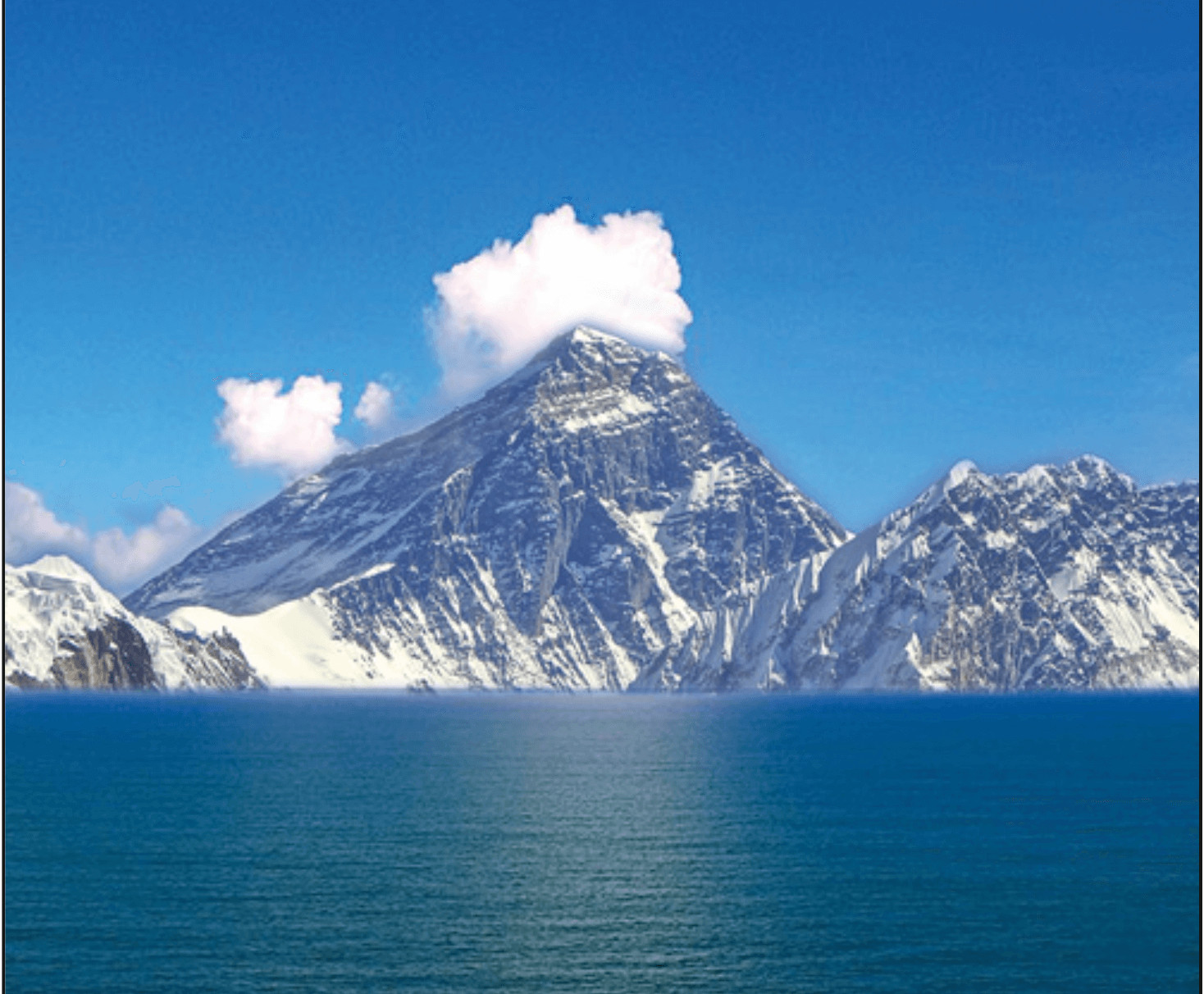
Nepal’s Himalayan terrain has an average elevation of 3,265m, the highest average of any country in the world. The average height of Switzerland is 1,350m, while China is at 1,839m. India is only 621m. In other words, Nepal literally sits at the roof of the world, and with the climate crisis plus a changing global strategic balance, what happens here does have a relation with the Indian Ocean.