

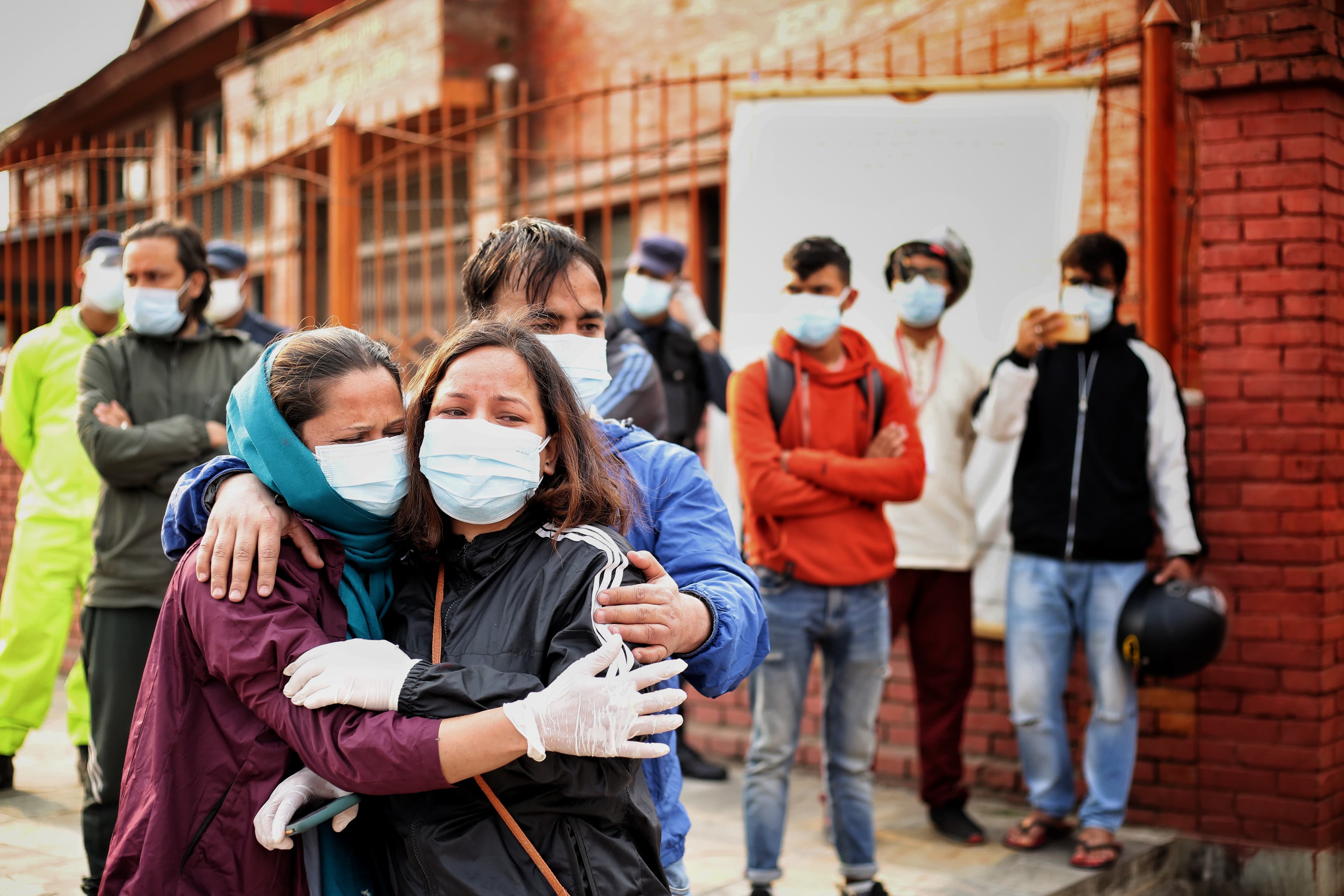
Only a month ago, even prominent doctors in India were declaring that the country had defeated the novel coronavirus.
They felt that herd immunity in cities like Delhi would protect people from infection and death. Based on a few dubious studies, they conceded that a large proportion of Indians had acquired herd immunity through mild or asymptomatic Covid-19 infections.
Just like the theory that a lifetime exposure to germs would protect South Asians, herd immunity also turned out not to be true.
Here in Nepal we are seeing a surge that is proportionately similar to India. The exponential rise in the number of cases, infection of younger cohorts, and the severity of the disease, bear all the hallmarks of the contagion sweeping across India.
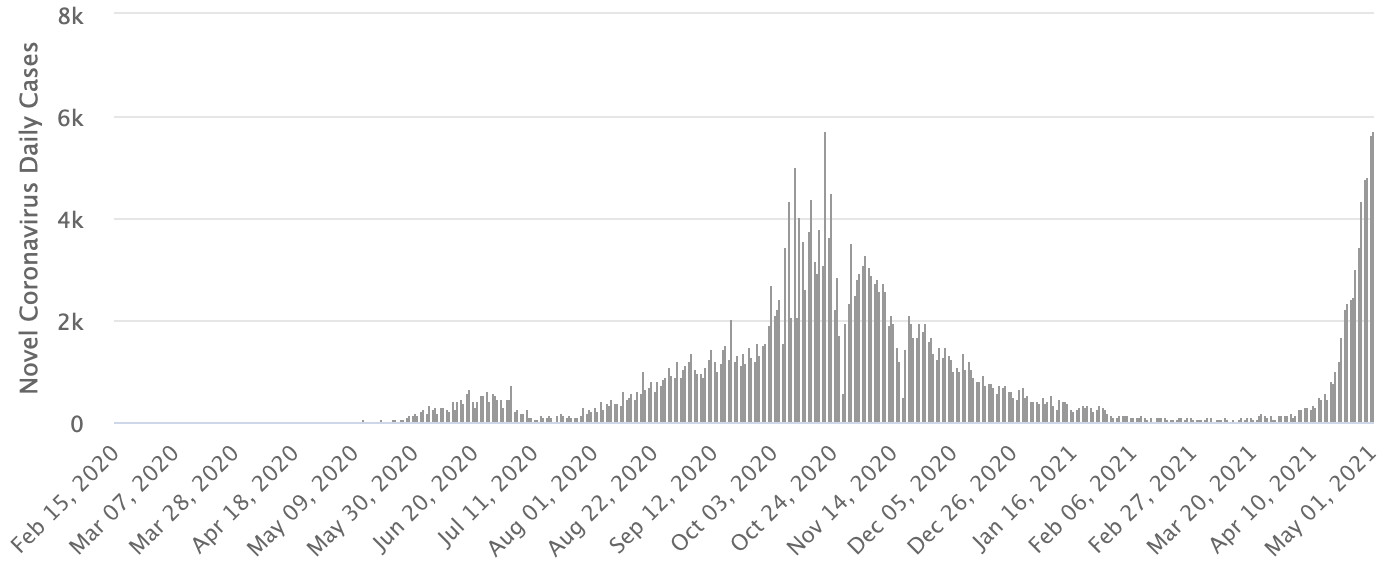
While we try to treat the sick by increasing hospital space and ensuring oxygen supply, we must also plan for an exit strategy that entails acquiring more effective herd immunity through mass vaccination, and partial lockdowns enforced with all precautionary measures.
Over-preparation rather than under-preparedness needs to be our mantra. Widespread vaccination is the key to get us out of this pandemic, and we have lost precious time with the delays.
This means our vaccine diplomacy has to go into top gear. If Covishield from India is not available, we must lobby for as many dosages of vaccines from China, Russia, or the United States, and administer them urgently.
All of these vaccines are in general at least 50% effective (the ‘pass mark’ for vaccine efficacy). None of the inoculations appear to have serious adverse effects, even though there are questions about whether they provide enough protection from the new strains, and duration of immunity.
We are trying to immunise the population from SARS-CoV-2, which happens to be a wily killer that exploits the human need for social interaction and mobility. Analysing this sudden and rapid spread of the virus in the Subcontinent, it looks like South Asians are more vulnerable because of our co-morbidities.
South Asians are known to be genetically more susceptible to diabetes and cardio-vascular diseases. The diet and lifestyle of people in the 40-70 age group increases the risk factor for obesity, diabetes and hypertension. Not unsurprisingly, the death toll due to Covid-19 is higher in this age cohort among South Asias than in Europe or the Americas.
The other reason for the infection suddenly taking off again in our part of the world is that we let our guard down, attending festivals, religious ceremonies and political rallies.
And then there is the presence in Nepal of both the UK variant of the virus ( B.1.1.7) and the B.1.617 (Indian variant) both of which are at least 20% more transmissible. The good news (at least so far) is that these variants may not be any more lethal than the standard virus. But even if they are not, we desperately need to stop transmission.
And since this is a respiratory virus, the most effective way to do that is still to wear a mask, avoid crowds and use hand sanitiser.
In a pandemic of this scale, the general public also needs to know what treatment works and does not. Oxygen, if available, is definitely helpful since it is a drop in oxygen level in the blood that leads to serious complications.