Up until two months ago, health experts were perplexed as to why mostly younger people were dying of Covid-19 in Nepal and other South Asian countries. In Europe and North America, it was mainly the elderly who were victims.
In fact, age-wise breakdown of coronavirus mortality by Health Ministry in August showed that most deaths recorded were of people in the 41-50 years category. This was explained by the fact that younger people were moving about more, and were bringing the virus back from India or from hotspots within Nepal.
But since then, the virus is spreading within the community and families, younger asymptomatic people who have not been tested are infecting elderly family members at home.
September-October saw a sharp rise in the fatality of people in their seventies and above from Covid-19, even though infection rate is much higher in the 21-50 age group. On 31 October when Nepal registered 23 deaths a day, 13 of the fatalities were above 70, and 20 of them were aged between 60-70.
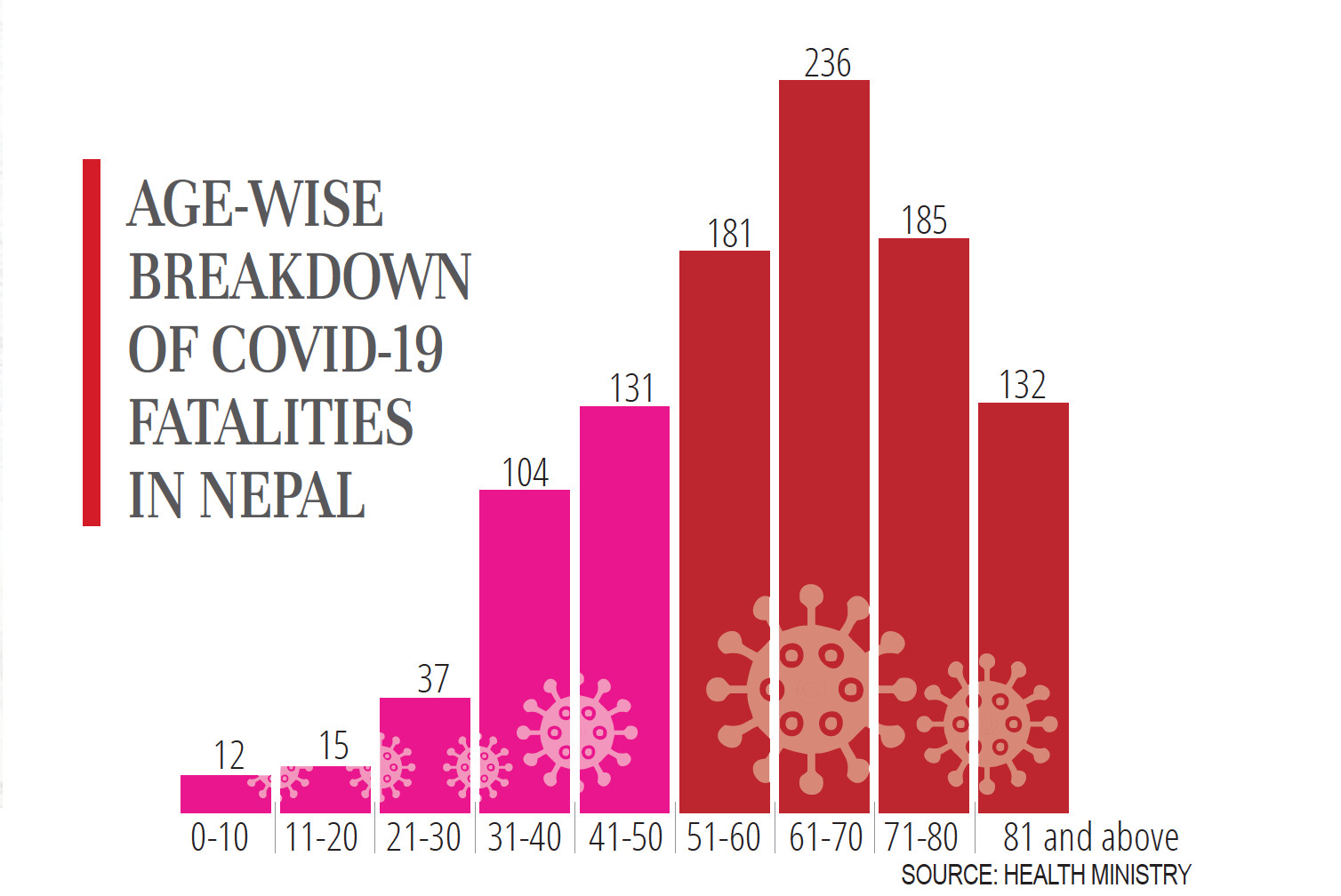
Health experts say this is striking proof that younger people are now taking home SARS-CoV-2 and making their parents and grandparents seriously sick. This trend may have been exacerbated by families travelleing to far corners of the country for get togethers over Dasain, and a new spike in infections is expected in the coming week.
Despite being the most susceptible to coronavirus, the elderly were already getting the least priority from the state, society and increasingly even within families. Physically fragile, suffering memory loss, or lonely seniors are politically ignored and socially ostracised.
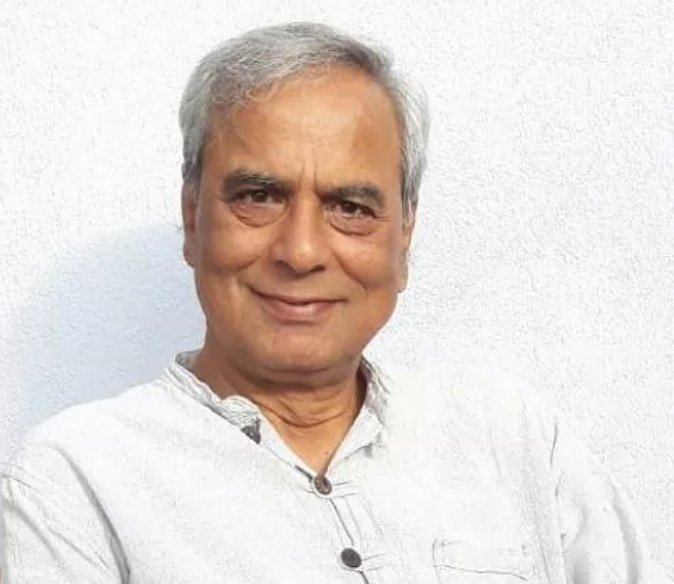
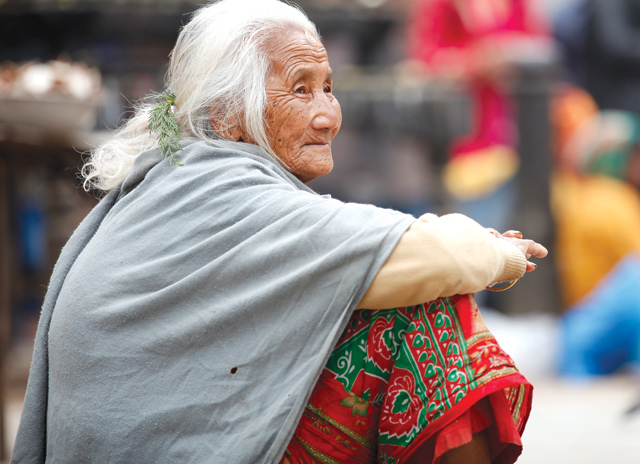
“We know senior citizens are at the most risk, focus should have been on saving them during this crisis, but they are literally on the bottom of the ladder in terms of society’s priorities,” says Krishna Murari Gautam (pictured left), social scientist and founder of Ageing Nepal that helps old age homes manage the coronavirus.
“Most households are misinformed: people think old people cause and spread Covid-19 but it is the younger people who are exposing them to the virus, so they have to be mindful of their behaviour,” Gautam adds.
To be sure, the elderly were already the most vulnerable, but now the pandemic has added to all the pre-existing problems they faced: collapse of joint families, children and grandchildren abroad for studies or work, economic hardships and expensive health care.
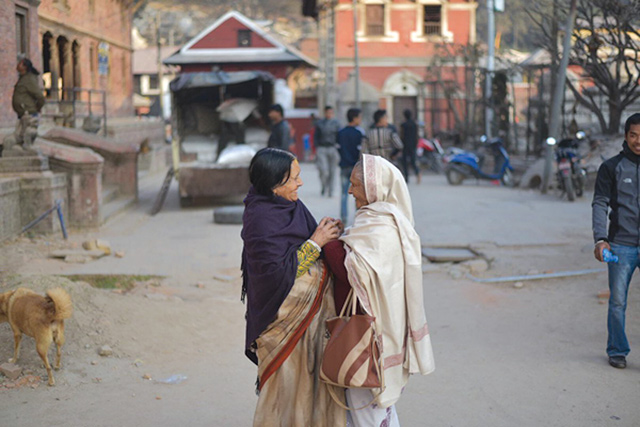
Older people are now more isolated than ever within their homes and communities: they cannot go out and mingle within a limited circle of friends and relatives, visit temples or take part in community bhajans and other religious activities.
To make matters worse, they have been terrorised by the daily television headlines that highlight the death toll. Many are now showing psychosomatic symptoms of coronavirus without actually being infected out of sheer anxiety.
In others, mental health illnesses has become an increasing problem. Those on medication for depression and dementia are suffering relapse due to additional stress, say health experts.