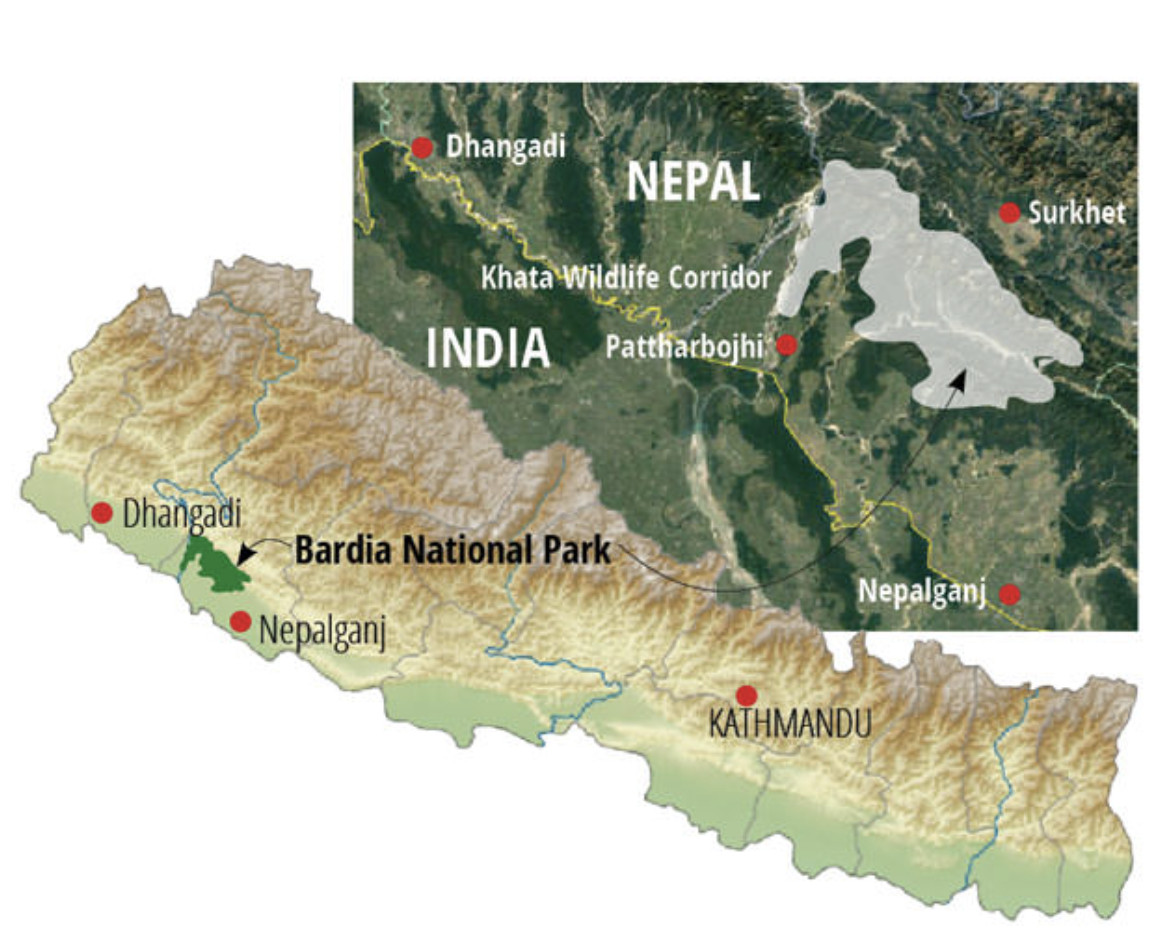
Before Covid-19 and lockdowns I would be guiding tourists around Bardia National Park this time of year. But the pandemic has meant empty homestays along the Khata Wildlife Corridor that connects wilderness areas in India and Nepal.
Local villages may have lost their income from eco-tourism, but the absence of people during the lockdown means that wild animals have reclaimed their space.
Even with the restrictions on travel and scorching pre-monsoon heat of the plains of western Nepal, I cannot bring myself to stay indoors.
I am involved with the Khata Wildlife Corridor Homestay Management Committee, which means I used to organise jungle safaris and wildlife excursions, showing visitors what Bardia has to offer. But it is not merely a job for me — I have been roaming these forests near my home since childhood and been passionately involved in nature conservation.
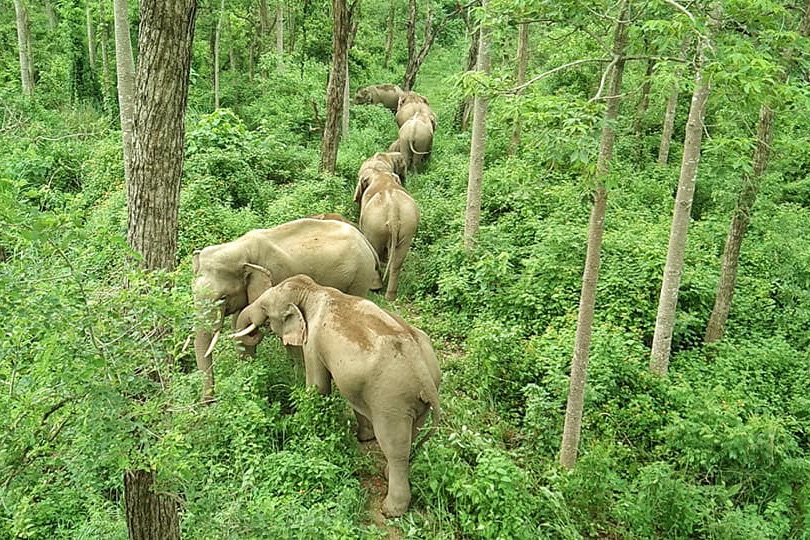
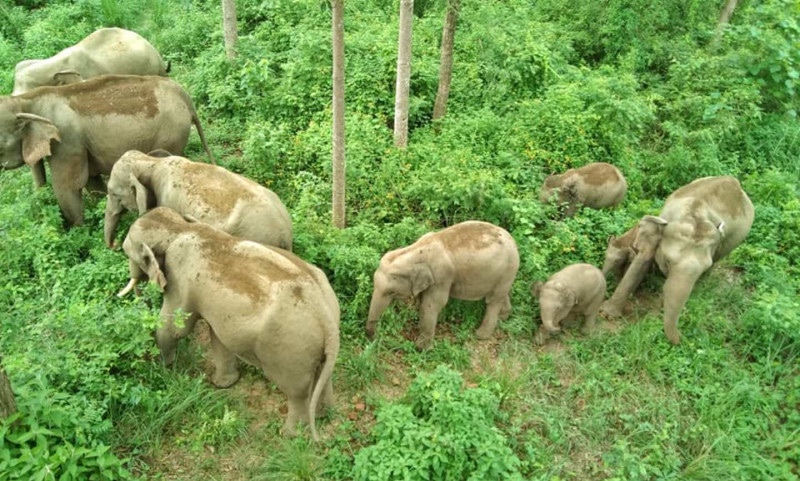
On 10 June, I was on my way into the forest when I saw a herd of about 40 elephants, ranging from calves to adults, moving just half a kilometre from the village. To say it was a sight to behold is an understatement — it is extremely rare to see such a large herd of elephants this close to human settlements. Just as rare as it has been to see the closely-watched herds moving across Yunnan Province in China.
Elephants in Bardia usually migrate through the Shiva Community Forest in Madhuban Municipality to the Katerniaghat Wildlife Sanctuary in India’s Uttar Pradesh during September and October, and return to Nepal as the monsoon approaches. It is a rhythm dictated by tens of thousands of years of migration of the ancestors of these great herds.
And although this group was the largest I have ever seen, it is quite common to see smaller elephant herds within the Shiva Community Forest.
This year, possibly because of the lack of human movement, the herd didn’t bother to stay within the jungle corridor in their annual migration back into Nepal, but marched right through the villages.
I followed the elephants along the village roads for quite some time, taking many photographs and videos along the way. I was so excited, there was no time to be afraid. These matriarchal herds can be nasty if they feel their calves are threatened.
The herd sliced right though roads and grasslands, stopping to graze before lumbering peacefully past farms. Had there been a lack of fodder, they might have broken into the fields of maize.