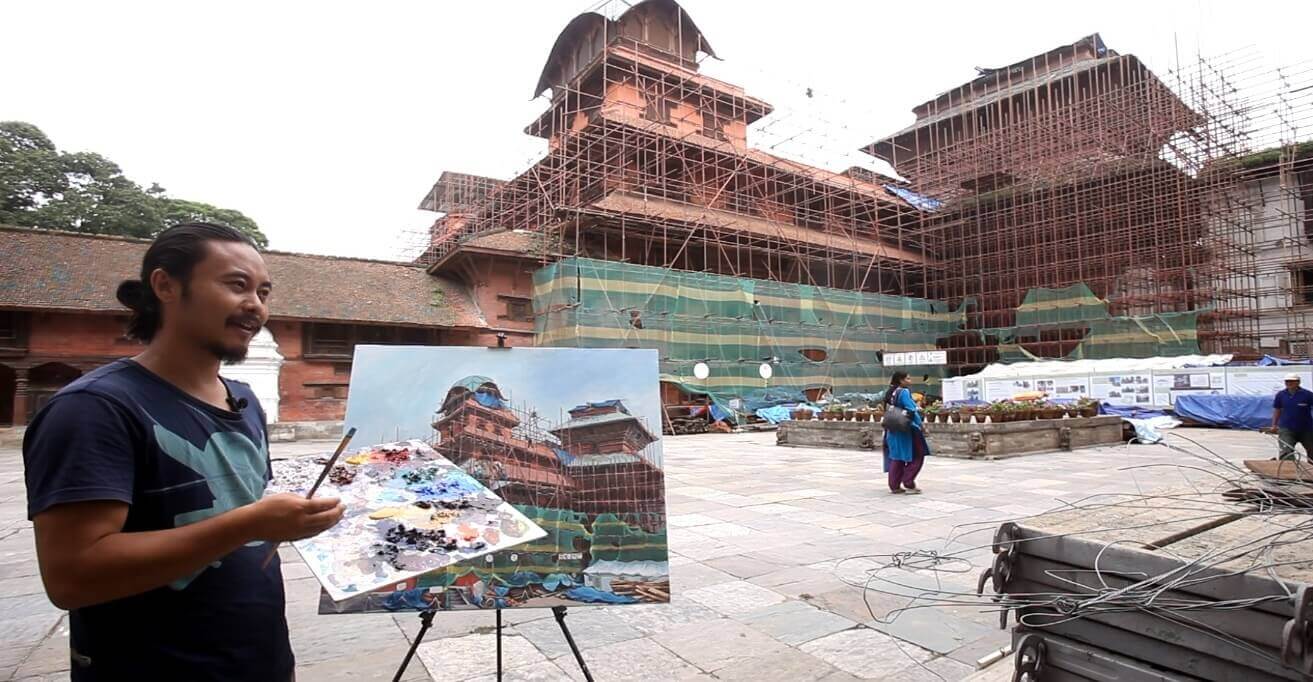
Curious onlookers gather around Prabin Shrestha as he paints the post-earthquake reconstruction of the imposing neo-classical façade of the Gaddi Baithak complex.
The canvas picks up the small details of the ongoing restoration: the green net, the scaffolding, danger signs warning people of falling debris. Onlookers at the Hanuman Dhoka Museum Square are impressed with the near-photographic realism.
“Wow, thyakkai (‘so exact!’),” is the common refrain. Some ask if they can take pictures, and others want the artist to explain why he paints the ruins and not the beauty of the monument before it was damaged in the earthquake.
Shrestha is busy with his brush-strokes, but answers patiently: “Painting this palace as beautiful will not make it beautiful, the unfinished construction shows much work still needs to be done.”
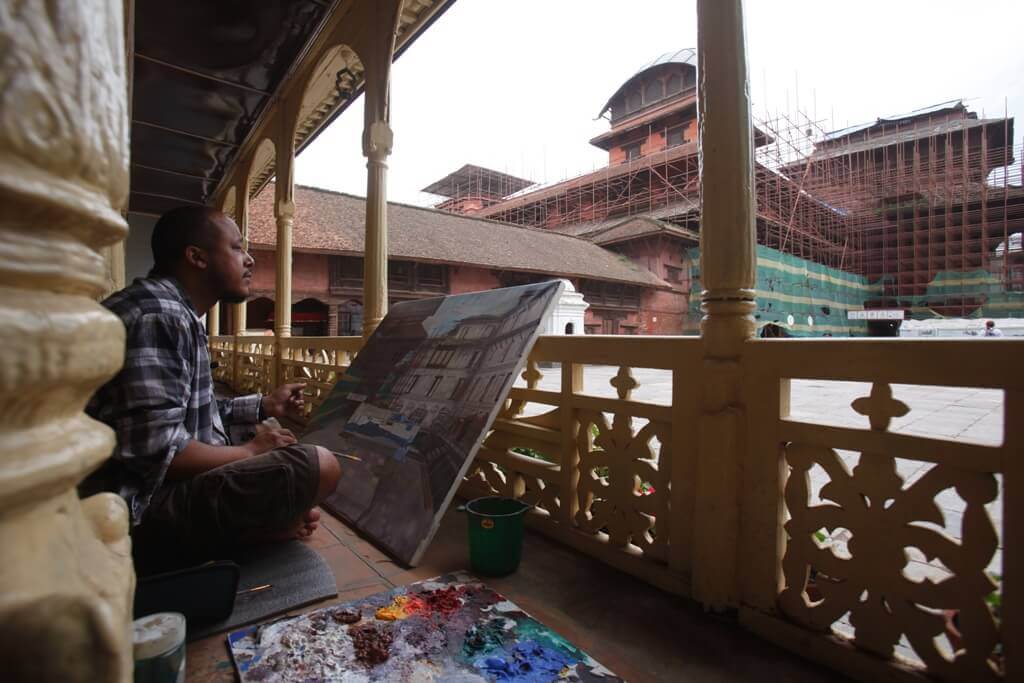
Shrestha is a member of the young artists’ group Paasapi (‘a group of friends’ in Newari) which has been busy painting what the 2015 earthquake did to Nepalis. The four art students had been mural painters, but after the disaster, they turned to record the aftermath through art.
The four first started by painting the damaged Durbar High School, Lalitkala Campus, and other monuments around Kathmandu, and even sold a painting. But that soon changed.
Paasapi member Pradip Pal Saud explains: “We realised that we were actually documenting history, and that had more than aesthetic value. So, we decided not to sell what we painted.” Instead, they went around earthquake-ravaged neighbourhoods conducting art workshops for children, and painted damaged homes, people trying to rebuild their lives.
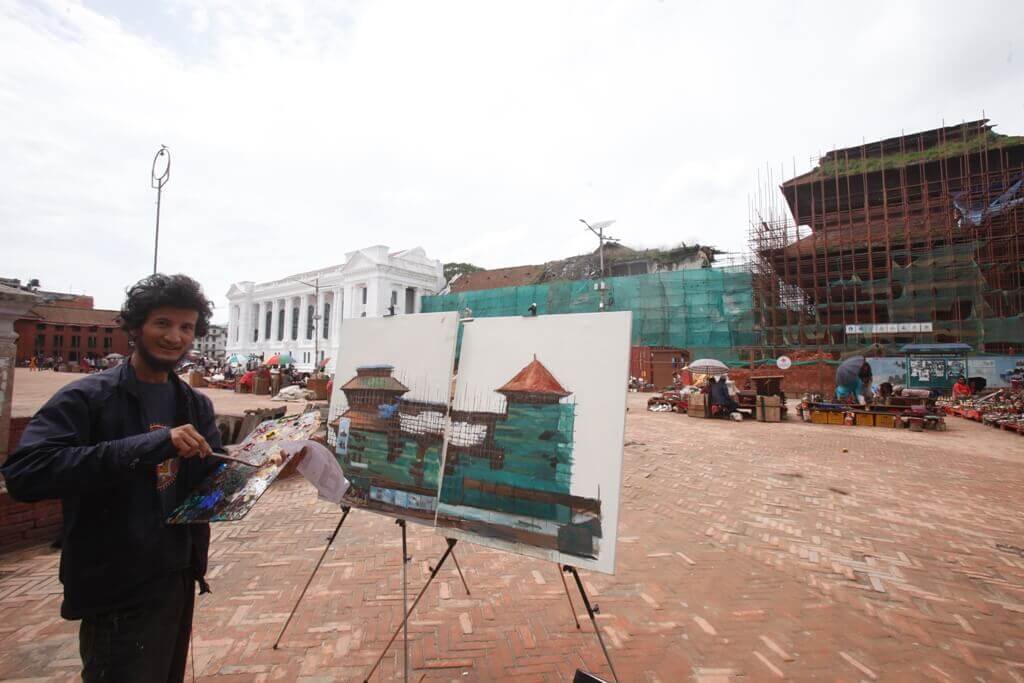
Their paintings did not just depict the desolation, but also heart-warming stories of people helping each other and their inner strength in overcoming the crisis. Sometimes, the artists were mistaken for relief workers, and survivors came with their citizenship cards to ask for help. Others would say: “My house is much more damaged, you have to come and paint it too.”