When a Comprehensive Peace Agreement ended a ten-year war between the Nepal government and the erstwhile Maoist rebels in 2006, both sides pledged to set up commissions to address transitional justice.
But now that the former enemies are the state, and two of the parties that were killing each other from 1996-2006 have joined to form the ruling Nepal Communist Party (NCP), conflict-era crimes are being brushed under the carpet.
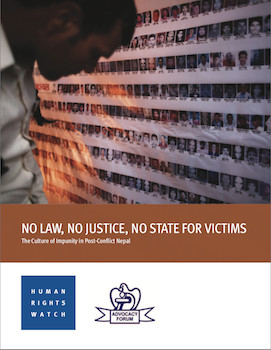
Fourteen years after the end of the war, a 53-page report, No Law, No Justice, No State for Victims: The Culture of Impunity in Post-Conflict Nepal, tracks the lack of progress in investigating and prosecuting 62 extrajudicial killings that Human Rights Watch (HRW) and Advocacy Forum first documented in 2008.
The report by the two groups says there has been little progress in prosecuting murders, disappearances, torture and rape, despite court orders requiring investigations to proceed. Police and prosecutors have said the cases will be handled by Nepal’s transitional justice mechanisms and not the normal judicial system.
This inaction is helping to sustain an ongoing pattern of serious violations after the end of the war, undermining the rule of law and efforts for security sector reform, the report released in New York on 20 November says.
“The government of Nepal is protecting alleged abusers at the expense of victims’ rights and undermining the rule of law,” said Meenakshi Ganguly, South Asia director at Human Rights Watch. “Rather than providing truth and reconciliation, the weak transitional justice structures have been used to create delays and make excuses to avoid criminal investigations or essential reforms.”
The two groups urged Nepal’s international donors and the United Nations to press the government to stop impeding justice, and to amend transitional justice legislation to comply with Supreme Court rulings and obligations under international human rights law.
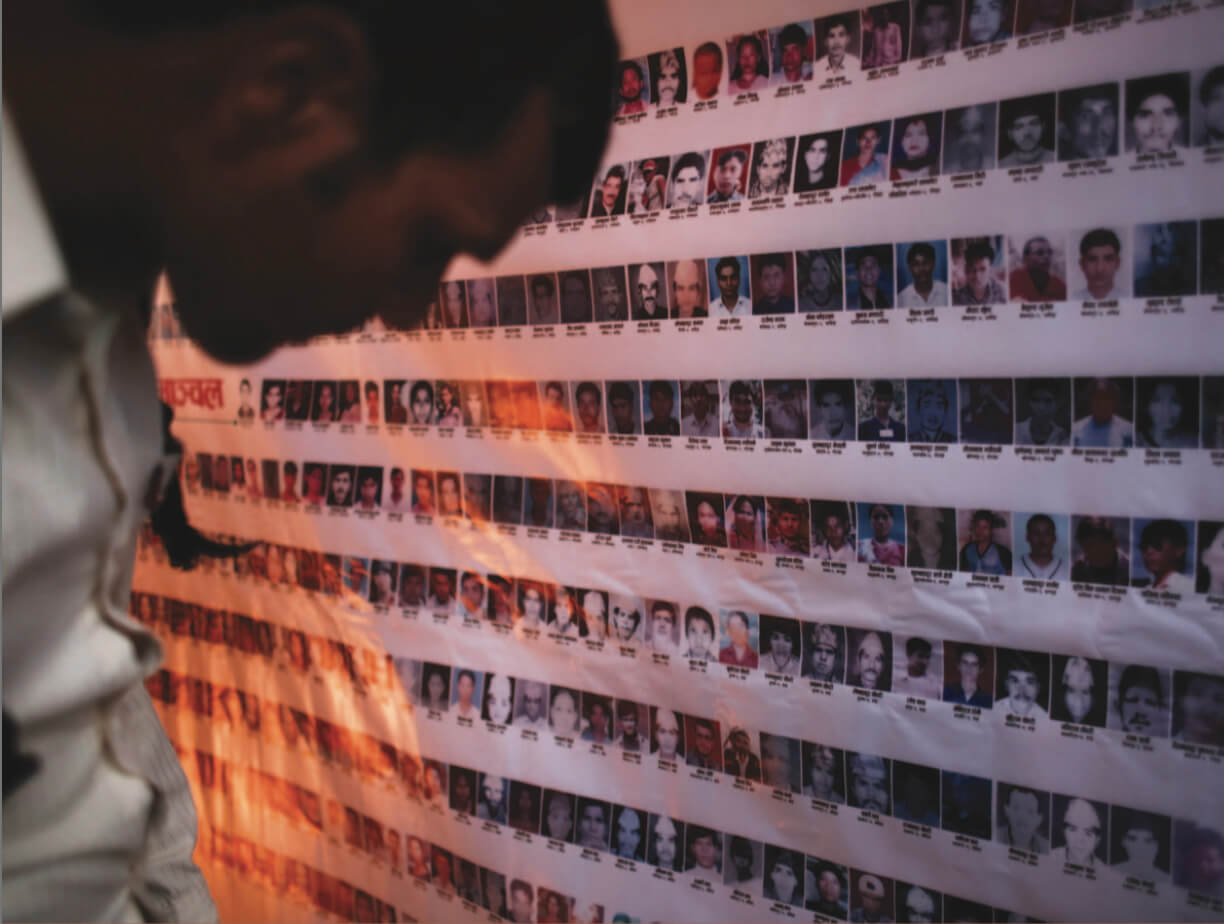
The government did establish a Truth and Reconciliation Commission and a Commission of Investigation on Enforced Disappeared Persons in 2015 to expedite the legal system to deliver justice, and receive over 60,000 complaints but has not completed any investigation.
In 2015, the Supreme Court struck down parts of the 2014 Transitional Justice Act which had allowed for pardon even for heinous crimes. It ordered the government to remove those provisions and the court denied an appeal by the government on 27 April to reverse its previous ruling. The government has pledged to do amend the law, but has not done so.