
Nepal’s education system was in crisis long before the pandemic hit. But with schools closed now for four straight months, remote learning has also exposed the class divide in access to education.
There was already poor quality of instruction in government schools, and parents were sending their children to more expensive private institutions. But this inequity in schooling has been further exacerbated by the need for remote instruction due to the COVID-19 crisis.
While better endowed schools are conducting online classes, the digital divide has meant that a majority of schools and students in the country have been left out.
By making self-contradictory rules, the government has sowed further confusion. It announced classes would be conducted through ‘alternative’ systems, but did not ensure that students had tv sets, mobile data, laptops, and did not train teachers in distance learning.
Even in Kathmandu Valley, many students do not have access to computers and WiFi to take online classes, so the situation in the remoter districts are much worse. Meanwhile the Ministry of Education, Science, and Technology just issues directives, tells schools conducting regular online classes not to charge fees, but without making alternative provisions for teacher’s salaries.
In May, the ministry issued the ‘Student Learning Facilitation Guide for Alternative Systems’ which mentioned radio, television, online and offline lessons, self-learning, and remote teaching as methods to be used. But uneven access to technology has created a divide in the past four months between those who get to learn who does not.
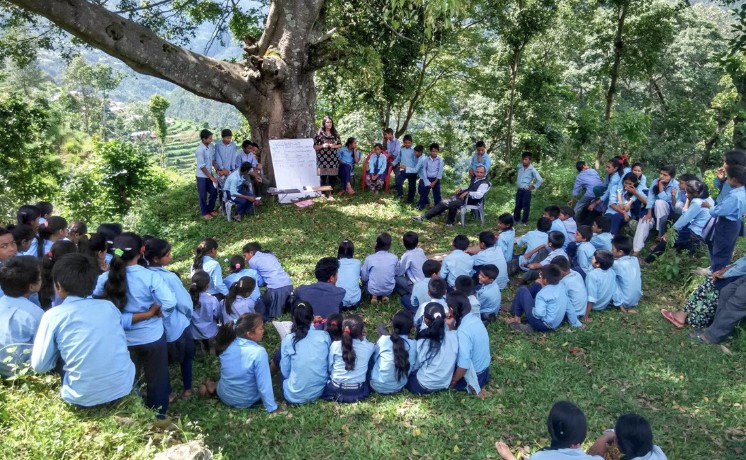
“The main problem with alternative learning systems is the digital divide,” explains Shishir Khanal, co-founder of Teach for Nepal. “The only way to bridge this is to go back to in-person teaching by organising staggered classes with precautions, or for teachers to physically visit students’ homes maintaining distance. Trouble is that many of the schools have been converted to quarantine centres.”
A survey of access to technology in Tulsipur in the western Tarai recently showed that even in the town, only 6% of students in government schools had WiFi access at home. Only 21% in higher education had radio sets at home for FM classes.
Most private schools had been taking online classes for the past two months until the private school organisation PABSON decided to shut all online classes from Thursday to protest the government’s decision not to allow them to take fees from parents.
There is technology gap among students even in Kathmandu Valley. At the Pragati Shiksha Sadan Secondary School in Lalitpur, only a quarter of students are taking online classes. Of the rest, many are stuck outside the Valley because of the lockdown and poorer families cannot afford laptops and Wifi.