
|
|
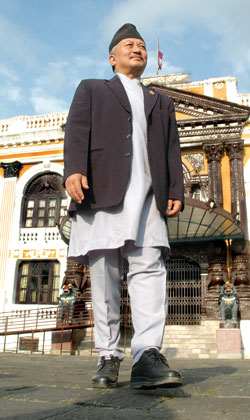
| WALKING TALL: Nepali politics may look hopeless, but house speaker Subhas Nembang, seen here on Tuesday outside parliament, is making progress. |
The interim parliament is sitting regularly again. Electoral bills are being discussed. The government is talking to janajatis and madhesi activists and is nearing agreement on November polls.
After months of deadlock and delays, it looks like everyone is finally focused on ensuring that the constituent assembly doesn't leave anyone out.
"Everyone agrees with the demand for fair representation in the assembly to draft the new constitution. We just have to find the right mechanism," says Speaker Subhas Nembang, whose considerable negotiating skills in the past week have helped bring all sides together.
At the State Affairs Committee on Monday, Minendra Rijal of the NC-D looked tired but happy. Barely 100 m away at the Peace and Reconstruction Ministry, Ram Chandra Paudel was closeted in meetings with the Nepal Adibasi Janajati Federation to discuss proportional representation.
After a meeting with the MJF in Birganj last month, most of the 26 demands of the madhesi activists have been addressed, and MPs stopped obstructing the House after a commission was set up to investigate the tarai incidents and an agreement reached to review demarcation of constituencies.
Even Prime Minister Koirala was upbeat. "This is good," he told janajati activists on Monday in Baluwatar. "If ethnic participation makes democracy stronger, let's negotiate and make it happen."