
|
|
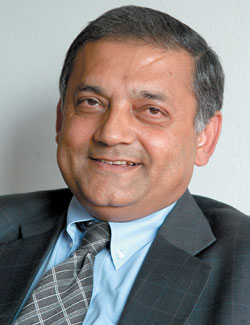
The Peace Secretariat is supposed to provide backup for the peace process, but has been overtaken by unrest in the tarai. Nepali Times asked Secretary Janak Raj Joshi if his mandate has changed.
Nepali Times: We do not hear much about the Peace Secretariat these days. What are you busy with?
Janak Raj Joshi: The saying goes 'still waters run deep', We run deep. The Peace Secretariat is primarily mandated in four major areas: facilitate the negotiators, provide technical support to the government and peace institutions, design policies and programs for post-conflict management, and give logistical support to the peace process. The services of the secretariat are in-built in to the system. We do not appear as a separate entity. Achievements so far in the peace process are a collective effort of the political parties, the Peace Secretariat, civil society, media, and the international community.
At present we are working on a plan of action to implement the provisions of the Comprehensive Peace Accord (CPA), designing policies on the internally displaced, drafting the terms of references and the organisation structures of the various commissions stipulated in the peace accord. The secretariat is also involved in negotiations with the Madhesi Janadhikar Forum and the Tarai Mukti Morcha Goit Group, etc. We are designing a system under which the demands of all sectors are paid attention to in the Constitution Assembly election.
Is there a feeling that the politicians drive the peace process, and use the Secretariat only when it suits them?
To an outsider it may appear so, but the fact is that political negotiations need to be done at the political level. We are working as a catalyst by providing the technical backup for the negotiators. For instance, it was the secretariat that developed a draft of the CPA and it was negotiated at the political level. We provide the politicians the references on cross-country experiences so that they can make informed decisions. While the working groups of the eight political parties were negotiating on the electoral process, some of the members had difficulty in understanding the complex electoral system such as the parallel and mixed proportional process. It is up to the political parties to make a choice, but the secretariat can be involved.