

 "A ceasefire and peace process do not mean that there
is safety," says UNICEF mine and bomb risk expert Hugues Laurenge. He explains
that the danger from what are collectively called 'improvised explosive devices'
is greater now, because civilians have greater freedom and flexibility of
movement. Also, although the military positions of the Maoists and the security
forces are being dismantled, not all explosive devices are being removed or
defused.
"A ceasefire and peace process do not mean that there
is safety," says UNICEF mine and bomb risk expert Hugues Laurenge. He explains
that the danger from what are collectively called 'improvised explosive devices'
is greater now, because civilians have greater freedom and flexibility of
movement. Also, although the military positions of the Maoists and the security
forces are being dismantled, not all explosive devices are being removed or
defused.
Rough estimates say there are anything from 100,000-500,000 such devices waiting to go off. The estimates vary vastly, because no one is really sure how many explosives are in storage, and the Maoists aren't saying where their caches are.
As part of the arms management deal, both the Maoists and the Nepal Army have agreed to deposit all IEDs in planned storage areas about 800m outside each cantonment site around the country. The plan is to store 5,000 in each area, but military experts say unstable devices such as commercial devices with detonators, simply need to be destroyed. "It is more safe to store rifles than IEDs," warns Laurenge, explaining that one bomb being triggered in a storage would set off thousands of others.
Maoist soldiers will be the most at risk if they smuggle bombs into the camps in violation of the agreement. In December, four Maoist combatants were seriously injured in the Chitwan cantonment and had to be airlifted to Kathmandu for emergency medical treatment. Three weeks ago, an explosion near the IED storage house in the Surkhet cantonment injured nine Maoists.
The arms management agreement states that bombs and landmines are to be removed from civilian areas and taken out of barracks and PLA camps to storage facilities within 60 days of the signing of the deal. That would make the cut-off date 27 January, which we are now told is "not technically possible".
The Maoists say they have begun the process of finding and storing their bombs, while the Nepal Army have begun assessing their minefields. The NA, which uses both anti-personnel and command-detonated mines, has 49 minefields all over the country. These are now being fenced off, but local communities continue to be in danger, especially from anti-personnel mines, which are hidden and, because they are more sensitive, take more time to clear. The NA's 15 teams, which consist of 100 personnel with de-mining expertise, can only clear command-detonated devices. Clearing the deadly anti-personnel mines will need international experts.
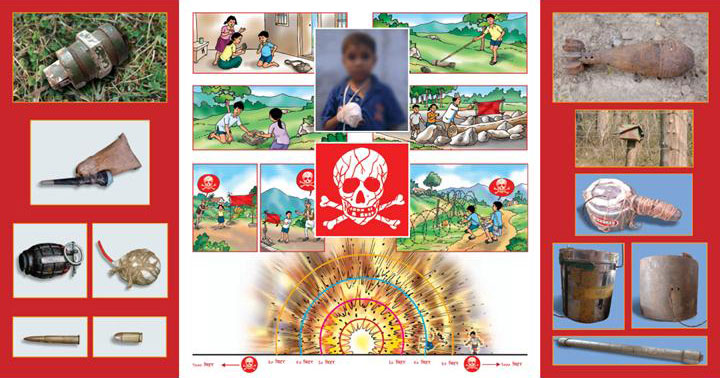
Many IEDs are said to be planted in civilian areas near households, posing an especially huge risk to children, who are likely to come across the devices and try to play with them. In many districts, the bombs, like the mines, are still under the ground. For over six months last year, heavy traffic was regularly passing over a 56kg cylinder bomb planted by the Maoists under a section of Rautahat's Gaur-Chandranighapur road-which had since been sealed. Proposed solutions included digging it up with a bulldozer, which would not just have killed the driver, but potentially spread shrapnel over a radius of a few kilometres ('Beneath the surface', #324).
There have been other incidents, such as where socket bombs have heated up and exploded, killing children playing nearby, and landmines have been set off by lightning. These all underscore the need for a risk awareness program like the one UNICEF runs until the explosives are destroyed. "We will be organising a massive campaign starting at the end of this month to teach civilians, who are most at risk, about explosive devices," says Laurenge.