
 |
Prompted by massive advertisement campaigns, sales of instant noodles and fizzy drinks have sky-rocketed in Nepal. Among the world's 7 billion people, 3 billion either eat too little, too much, or eat unhealthily.
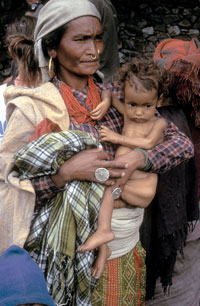
It is easy to detect when people are severely lacking calories because they will appear "marasmic" (chronic starvation). When people are obese, the effects are all too obvious as well. But it is "hidden" starvation (the group that eats unhealthily) that may go unnoticed.
If a nutrition survey is done in a Nepali village, it is likely to show a high degree of malnourishment. Many people are just barely healthy, which predisposes them to illnesses. While poor nutrition is the norm, people may have other priorities besides a healthy diet like buying a better television set.
Even in remote Nepal, instant noodles have replaced the more nutritious sampa or sattu made of barley or other grains. Noodles, although very convenient to prepare, only provide empty calories compared to the vitamin B and mineral- rich barley. Since 'mohi' (watered-down butter milk) has been replaced by sugary drinks where available, the nutritional trade-off has been unhelpful in promoting health. People may not appear to be starving, but the 'hidden' hunger is taking its toll.