
 Om Astha Rai
When Nepal was divided into six federal provinces at the stroke of the midnight hour on Saturday, violent protests were anticipated across the Madhes. However, the plains have been relatively calm this week.
Even though the Tharus have been demonstrating in huge numbers, and have announced a Tarai shutdown for four days starting Wednesday, the Madhesi people have not been seen agitating on the streets in the first two days of the 8 August deal which integrated five disputed districts of the Tarai with hill provinces.
To be sure, Madhesi party cadre have burnt effigies of top leaders of the four parties which signed the deal, carried out torch rallies and burned the draft constitution in some parts of the Tarai. But the mood in the Madhes seems to be more subdued with the people not joining in.
There were violent clashes across the Mid-west region on Monday which left one protester dead and four seriously injured in Surkhet. The locals continue to protest in Surkhet, but this is more a regional issue about not wanting to be a part of Province 6.
Federal Socialist Madhes Forum (FSMF) Chair Upendra Yadav on Tuesday warned of a strong revolt if the six-province federalism model was not corrected. Before walking out of a Constituent Assembly (CA) meeting, he said: "Identity and viability have been ignored while creating a Madhes province. People have rejected this federalism model. Do not coerce them to accept it."
But the Madhesi Front, a coordinating body of the disgruntled Madhesi parties led by the FSMF, doesn’t seem to be able to decide how to react. A meeting of the Madhesi Front had decided on Monday to wait for one more day to unveil its protest programs. The leaders seem to realise that their cadres have not wholeheartedly joined the agitation yet.
Birendra Prasad Mahato, a CA member from the FSMF, says: "Top leaders of the NC, the UML and the UCPN (M) have promised to revise the new federalism deal, so we are in dilemma over whether to wait for a few more days or launch protest programs right away."
But that may not be the only reason. Rakesh Jha, Siraha district committee President of the Tarai Madhesi Democratic Party (TMDP) says reasons are technical, and not political. "People in the Madhes are angry over how they have been treated by the ruling parties," he says. "But they cannot descend on the streets right away."
Rains arrived in the Tarai late this year, farmers who suffered from drought in June and July are busy planting paddy."It's difficult to rally people during the rainy season," says Jha. "The priority of farmers is the next harvest, they can think about constitution and federalism only after that."
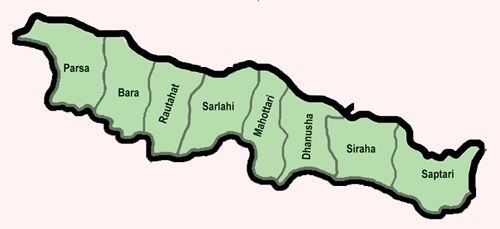
Mithilesh Yadav, a Tarai-based journalist, says absence of a trustworthy leader is another reason behind the delay. "The demand for one Madhes province is not that strong now," he says. "But the Madhesi are angry because Sunsari, Morang and Jhapa have been included in the eastern province."
He says, "The Madhesi people no longer trust the likes of Upendra Yadav, Mahantha Thakur and Rajendra Mahato because they always talk of a new movement but cannot walk out of the CA. If they quit the CA, come to the Tarai and be with the Madhesi people, they could start another movement here.”
The Madhesi people want federalism more than any other identity groups. It was the Madhes uprising that forced the then Prime Minister Girija Prasad Koirala to amend the Interim Constitution-2007 and accept federalism.
CA member Mahato says: "Silence of the Madhes does not mean that we have agreed to confine ourselves between Parsa and Saptari. It is like calm before the storm."