
Nepali Times

Back to Main Page

Hotel Echo’s last minutes

Wednesday, August 25th, 2010
..................................................................................................................

(The previous story ‘Lukla flight crash’ was filed at 9am on Tuesday morning, two hours after the plane went missing. This is an update with some facts corrected, and more details pieced together from interviews with pilots and civil aviation sources.)
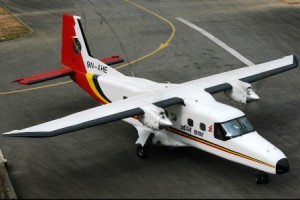
 A file photo taken in 2008 at Lukla airport of 'Alpha Hotel', the Agni Air Dornier 228 that crashed on Monday morning.

A file photo taken in 2008 at Lukla airport of 'Hotel Echo', the Agni Air Dornier 228 that crashed on Tuesday morning.

Capt Lucky Shah was an upbeat person, cheerful and popular with his colleagues. He was regarded by peers as a confident pilot: he had over 30 years of experience flying in Nepal and India. The son of a senior pilot for Nepal Army, he was no daredevil.

On Tuesday morning, word came that Lukla had good visibility for the first time in a week. Domestic airlines serving the gateway to Mt Everest all scrambled to get their planes in the air. There was a huge backlog of passengers and cargo at both Kathmandu and Lukla as the Khumbu geared up for the autumn trekking season.

The trouble was that it was raining heavily over central Nepal and the Kathmandu Valley itself was overcast with low clouds. Capt Shah, with co-pilot Sophia Singh, was the first off the domestic apron with a Buddha Air Beech 1900D that was also taxiing out for a Mt Everest sightseeing flight.

On board Agni Air’s German-built Dornier 228 with the call sign 9N-AHE (’Hotel Echo’), were 11 passengers. Five were Nepalis, four American, one British and one Japanese.

The plane took off, and made a standard instrument ‘Igris-1 Alpha’ departure, involving a climbing circle overhead, then heading north east. Despite the heavy rain and turbulence, the pilots must have been encouraged by Lukla reporting good visibility and high clouds. But 30 miles out and cruising at 12,500 ft, one of the generators on board packed up.

Capt Shah told Kathmandu air traffic control he was heading back, but didn’t at first tell them about the generator malfunction. As long as the engines are running, the plane can keep flying. But generators supply power to cockpit instruments, and Dorniers have a backup generator and also a standby battery pack.

Somewhere between the time that Capt Shah turned back and followed a 20-mile arc to intercept the approach to Kathmandu runway 02, the back-up generator also quit. With intermittent battery power, and steering only by compass, Capt Shah seems to have decided to head to Simra.

There are conflicting reports about whether he informed Kathmandu about his decision, or whether he told other Agni Air pilots on his company frequency that he had decided to make an emergency landing in Simra. Piecing together initial sketchy evidence, aviation sources say Capt Shah knew he would not be able to make the VOR-DME approach to Kathmandu without his distance measuring and directional equipment in the cockpit.

But even to land in Simra, he would first have to break through cloud in order to get some ground references. It appears that is what he was trying to do, descending steeply, trying to get visual with ground. The nature of the impact site near a school in Shikharpur of Makwanpur, a crater 10 metres in diameter, and the altitude of the crash (1,700ft), seem to corroborate this.

A lot of the details will have to come from the inquiry commission that has been set up by the Civil Aviation Authority of Nepal (CAAN) and questions will obviously be asked about the state of maintenance of aircraft in domestic operations. A Dornier is built with triple redundancies for most systems, and especially for onboard electrical supply.

Capt Shah, disoriented without instruments in a white-out, seemed to know as he dived to get below the clouds that this was his last chance to find an airport to land. His last words to his fellow Agni pilots over the radio were: “Bye bye.”

Go back to previous page          Bookmark and Share         


10 Responses to “Hotel Echo’s last minutes”

  1. srinkhala on Says:

    bye-bye? how could he? with the lives for so many others in his hands! could he have tried to climb over the cloud cover and then asked the tower or other aircraft pilots for help to guide him down somehow? what a tragic waste of human lives… how unlucky…

  2. Soren on Says:

    Just goes to show that accidents are always a combination of factors, not just one cause. This still leaves the mystery of the crater at the impact site, which seems to indicate a nose dive. Either the pilot lost all orientation because of malfunctioning cockpit instruments, or something happened to his controls while trying to break through the clouds to see the ground. Either way, an extremely tragic way to go. My thoughts and prayers with the crew and passengers.

  3. SEBS on Says:

    The Society of Ex-Budhanilkantha Students helped produce an investigative report on the poor state of Nepal’s aviation safety a couple of years ago. It was done in memory of fellow SEBSer, Hem Raj Bhandari, who perished in the Ghunsa helicopter crash in Taplejung along with other famous people like Harka Gurung, Tirtha Maskey etc.

    Here is the website: http://aviationsafetyinnepal.com/default.aspx

    and here is the report (link taken from website): http://aviationsafetyinnepal.com/Documents/Final%20Aviation%20Safety%20Report_ENGLISH.pdf

    Poor maintenance, bad weather, and poor regulatory and air traffic control are all identified as problems then. This crash shows how little has changed.

    RIP all those who perished in this crash. Pity how many lives we’ve lost (and may lose yet) with so little change/improvement!

  4. Nepalipunk on Says:

    Easier said then done. Shame on you srinkhala. Use your brain. Instead of blaming the poor and helpless pilot why dont’ you point the finger to the AGNI maintenance dept. and the government. How can the back up battery fail!!?? if only it was maintened and serviced regularly.this is insane. Companies and govt. use cheap labor to maximise profit and put innocent life on risk. Do you think the pilot had any other options ??
    “could he have tried to climb over the cloud cover and then asked the tower or other aircraft pilots for help to guide him down somehow?!!!
    i guess you watch too much movies. Get Real.

    May all the lost lives rest in Peace.

  5. Chandra Gurung on Says:

    Sooner or later, the Maoists may blame India for this. If not, at least, right wing conspirators?
    Btw,which wing was damaged first?

  6. armugam on Says:

    I have never heard pilots saying “Bye, bye”! They say “Happy landing” to others in air and ” Good day” when changing frequency.

    A sure case of equipment failure.

  7. Arthur on Says:

    With corruption rampant it is inevitable that inspectors of aircraft maintenance procedures will be bribed not to cause “unnecessary” costs by enforcing strict compliance. This makes it inevitable that essential equipment, in this case both primary and backup generators, will fail.

    It is surprising that aircraft in Nepal do not crash far more often.

  8. adnuk on Says:

    Who is Nepali times trying to protect here? we all knew that one of the generator on ill-fated plane was not working prior to take-off from Kathmandu airport? That the visibility in Lukla was bad. How come black box is still missing? when accident site and crater as you have reported is nothing more than a 10 metres in diameter. How can we be sure that last word of Pilot was “Bye Bye” ?? Are you guys trying to make a hero out of him to hide and absolve the crime of people in charge of AGNI and CAAN?.

  9. Jeev on Says:

    It is a very sad occurrence when something like this happens.
    It is even worse to see the Media rush to ‘ get the facts out’ without care for the implications they may have on the investigation to follow.
    I am really shocked to see the claim
    ” failed generator not being reported”
    placed in the article.
    The mention of the PIC, stating his intentions to divert to Simara on company frequency and failing to let the control know about it, can have serious implications with regards to the professionalism of the commander and is very speculative at best.
    I understand it’s the media duty to get the facts out but as responsible outlet of information, it should look into the implications its reporting will have and should certainly not publish something based on speculation, which is clearly the case for this article.

  10. grg on Says:

    well,,,,,,,,no one wants to die……after the generator and the instruments failed…capt shah tried everything he could and without power the plane must have been a brick falling from the sky….THE CAPT TRIED EVERYTHING A HUMAN COULD DO TO SAVE ,,,,,,but sad they crashed..

Leave a Reply


himalkhabar.com            Wave            

NEPALI TIMES IS A PUBLICATION OF HIMALMEDIA PRIVATE LIMITED | ABOUT US | ADVERTISE | SUBSCRIPTION | TERMS OF USE | CONTACT